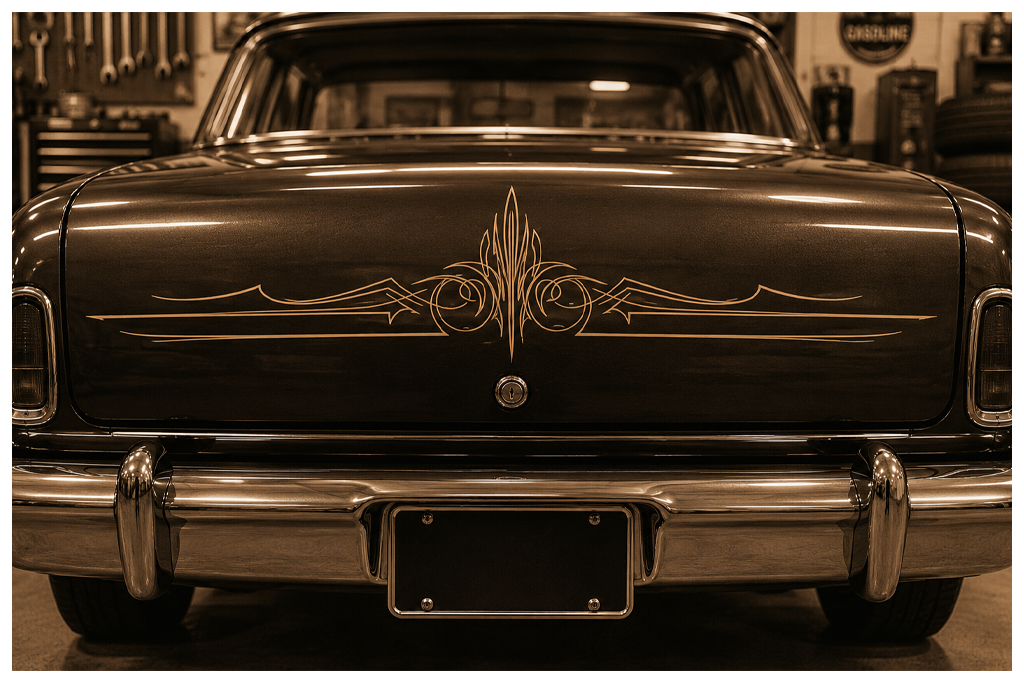
THE WORLD CHANGED ANYWAY
Chapter 3: The Fast Lane to Customization
By the age of fifteen, I had acquired both a car and a willingness to go wherever it might carry me, which is a dangerous combination in a young man and an excellent one in a businessman.
I took to visiting paint and body shops, the kind that specialized in turning ordinary automobiles into something loud enough to be noticed from a distance and admired up close. Southern California in those days was full of such places, each one convinced it was improving the automobile and perhaps the world along with it.
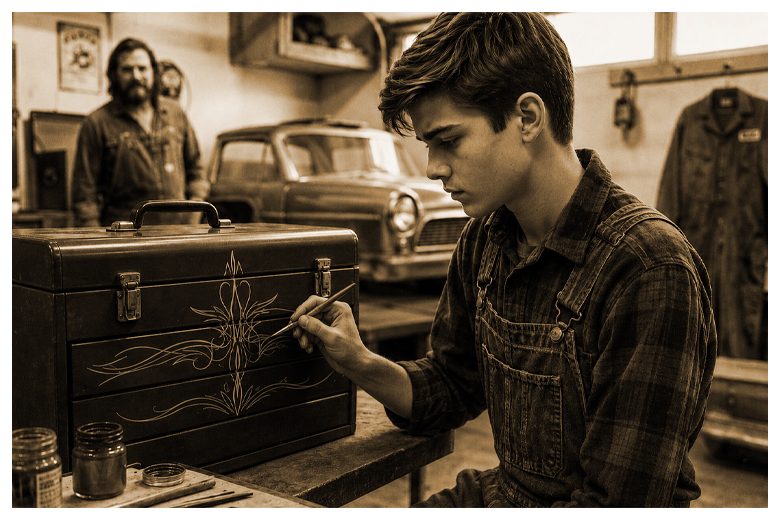
I would walk in and offer to demonstrate my skills by pin striping their toolboxes for free. This was an arrangement that suited everyone. The shop lost nothing, I gained a surface to prove my hand, and the toolbox came out of it looking far more important than its contents.
Now, a man may say he is not interested in decoration, but let him see his own property improved at no cost and he will reconsider his principles in a hurry.