SIGNAL HILL
WHERE OIL WAS MORE COMMON THAN COMMON SENSE
There are towns that become famous for their scenery, their architecture, or the character of their people. Signal Hill, California, chose a different path. It eventually became famous because somebody discovered there was an astonishing amount of oil hiding beneath it, and after that almost everything else became secondary.
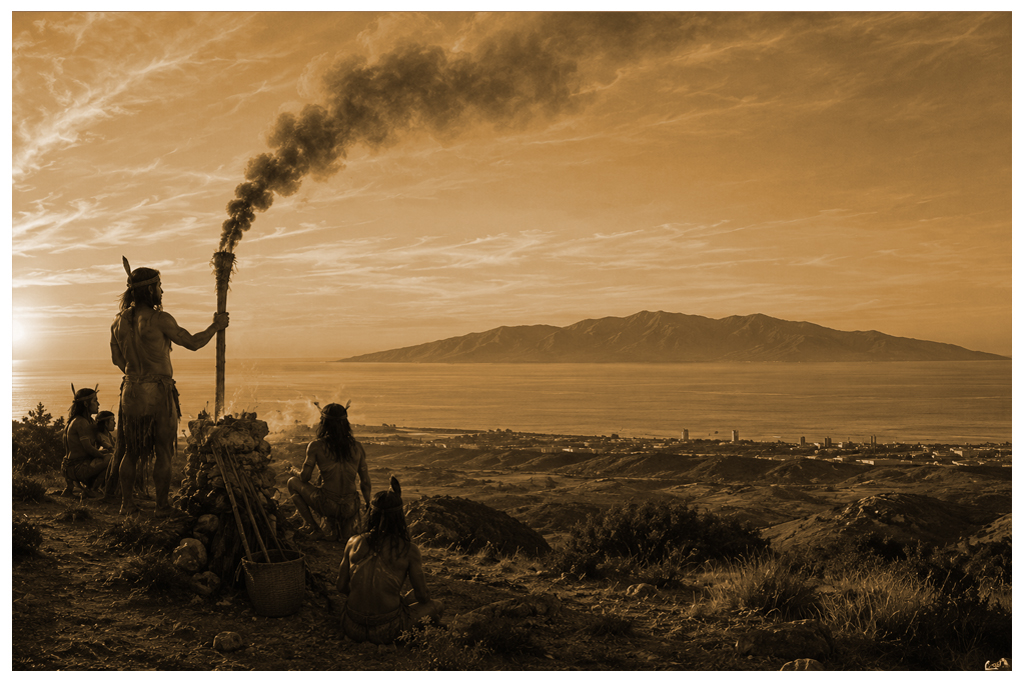
Long before the oil companies arrived with their drills and ambitions, the Puva Indians used the hill to send smoke signals to Santa Catalina Island, twenty-six miles away. The Spanish settlers admired the practice enough to rename the place “Loma Sental,” or Signal Hill. It was an honest name while communication was still the most valuable thing taking place there.
When someone discovered oil, as history has repeatedly demonstrated that whenever something valuable is found underground, human beings immediately become less interested in what is happening above it.
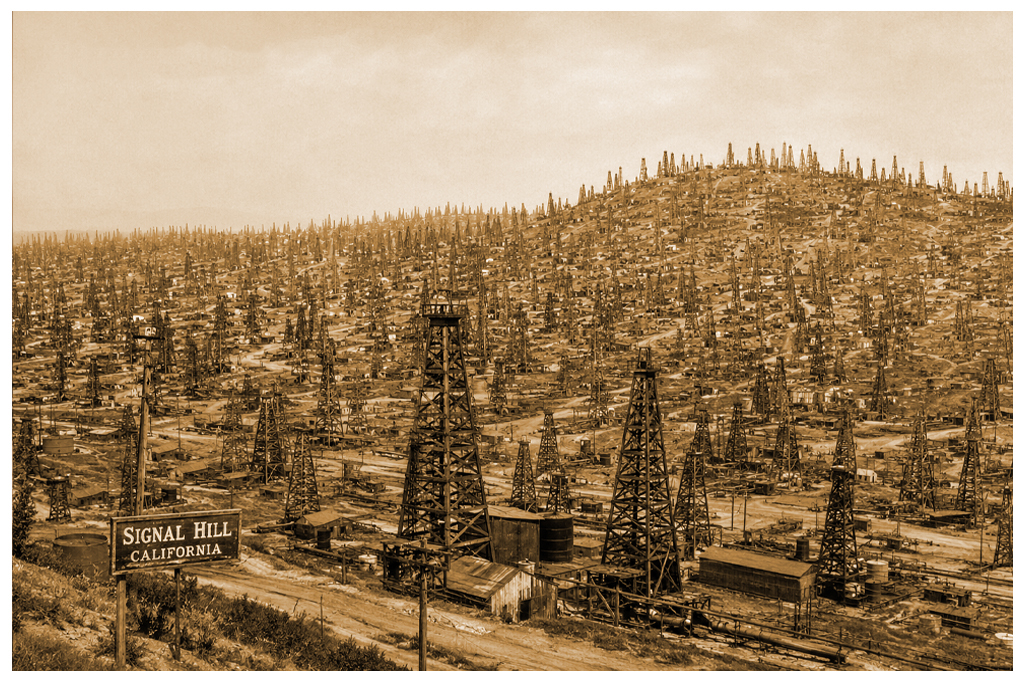
By the early 1920s, Signal Hill had transformed from a quiet hilltop with magnificent views into one of the richest oil fields on Earth. Mansions gave way to derricks, and the skyline became a forest of wooden derricks and machinery dedicated to extracting black gold as quickly as engineers could persuade it to leave the ground.
The oil companies expected prosperity.
They got prosperity, blackened mud dikes, noise, bars, roughnecks, politicians, and eventually police officers.
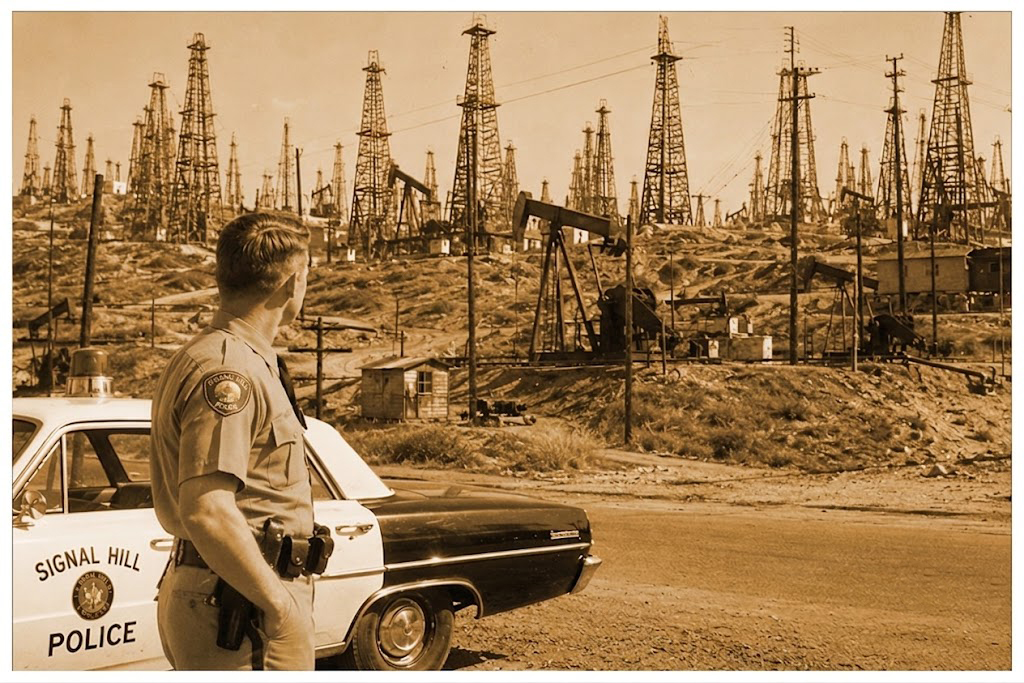
That is where my story begins.
When I joined the Signal Hill Police Department in 1965, nearly twelve hundred wooden oil derricks still covered the hill. Everywhere you looked, pump jacks nodded tirelessly as though agreeing with every decision that had led them there. The air carried the unmistakable perfume of crude oil, and by the end of every shift, so did most of us.
Signal Hill wasn’t a large city. Fewer than ten thousand people actually lived there, but during the day it felt five times that size. Oil workers arrived from every corner of the country, following drilling jobs the way migratory birds follow the seasons. They worked hard, earned good money, and considered it almost a civic duty to spend part of it in one of the city’s many bars before going home.
An oil town requires an unusual number of saloons for the same reason a fishing village requires boats. Both are simply serving the local industry.