THE WORLD CHANGED ANYWAY
Chapter 2: Mastering the Art of Signage
It came to me at an age when most boys are still deciding whether to climb trees or fall out of them that a man might earn an honest living telling other people when they were open for business and when they were not. It struck me as a respectable line of work, requiring very little lifting
and even less explaining.
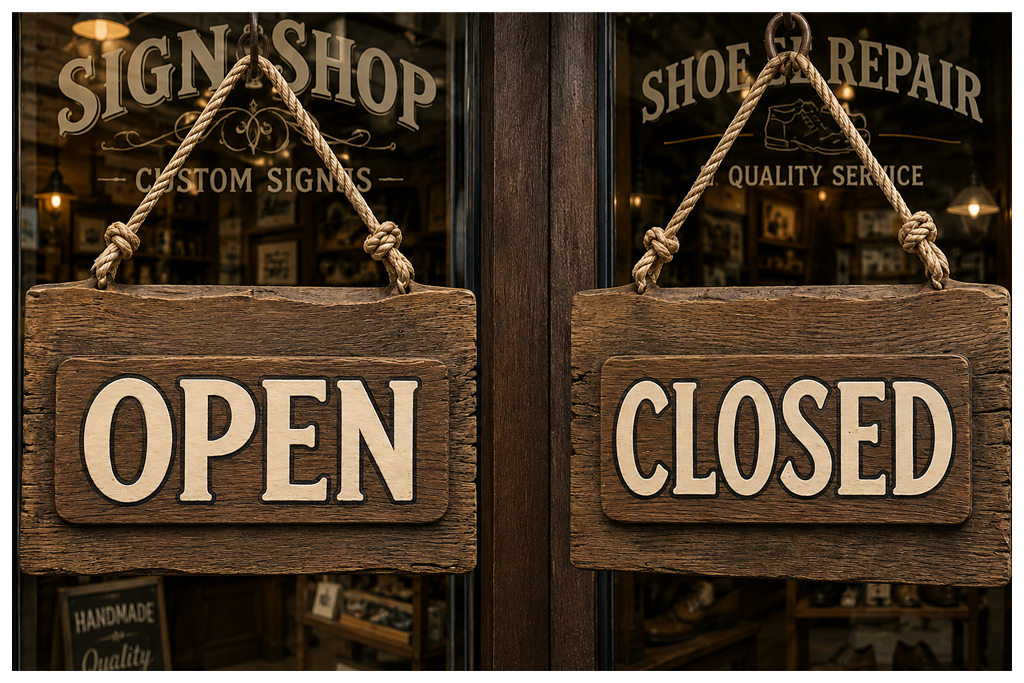
With the knowledge I had gathered from the old man’s shop, I began producing “Open” and “Closed” signs for the local merchants. They were painted on wood, fitted with a bit of rope, and possessed a firmness of opinion that many business owners lacked. A shopkeeper could argue with a customer half the day and still lose the matter, but a sign would settle it in a single glance and feel no regret about it afterward.
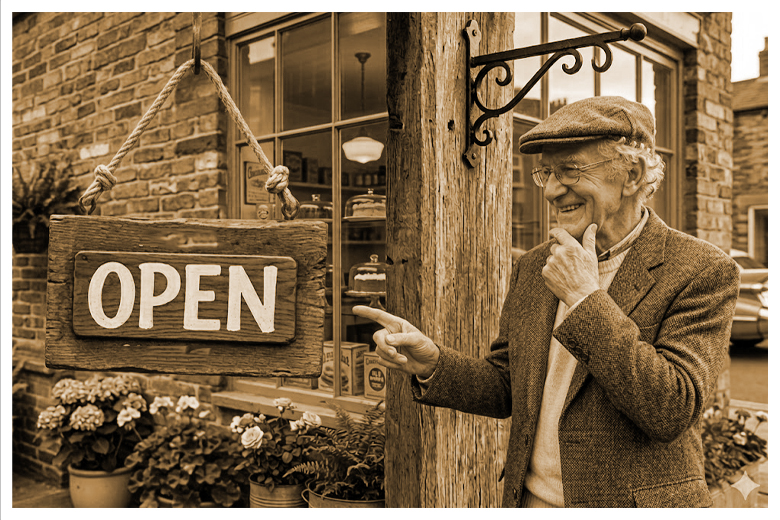
Before long, my work was hanging in windows all over town, swinging gently and making decisions on behalf of people twice my age and three times my size. I found this arrangement agreeable and saw no reason to question it.
Now I was only nine or ten, which might seem young for influencing the commercial fate of a neighborhood. But no one appeared troubled by it. A neatly painted board inspires a confidence that a small boy has to work years to earn, and even then may not manage.
I recall one shopkeeper in particular who took great pride in his new sign. He hung it in the window with ceremony, flipped it to “Open,” and stood back as though he had personally invited the town inside. The trouble was, he forgot to turn it the other way at closing time. For two evenings straight, customers came knocking well after dark, certain the sign would not lie to them. He blamed the customers at first, then the hours, and finally the sign, though it had done nothing but tell the truth it was given.
After that, he paid closer attention, and I learned something useful from the affair. A sign may speak with authority, but it still depends on a man to give it the right story to tell.
The signs led to more work, as such things tend to do once they start paying. I picked up additional painting jobs and came into possession of a principle that has proven reliable ever since. If a thing looks official, most folks will accept it without question, and a fair number will thank you for it besides.
It was a useful lesson, and one I put to work early, though not always in ways that would bear close inspection.